Northern Norway

Lofoten: fishing-village bases at 68° N where the weather, not the itinerary, runs the day.

Lofoten is a chain of steep islands at 68° N, about 180 km north of the Arctic Circle, joined by the E10 road and served by two small airports, a car ferry from Bodø and the coastal ships. It has rorbuer instead of city hotels, villages instead of a centre, and a maritime climate that swings from calm to storm within a day. This guide fixes the season, the arrival and the base before you pay for anything.

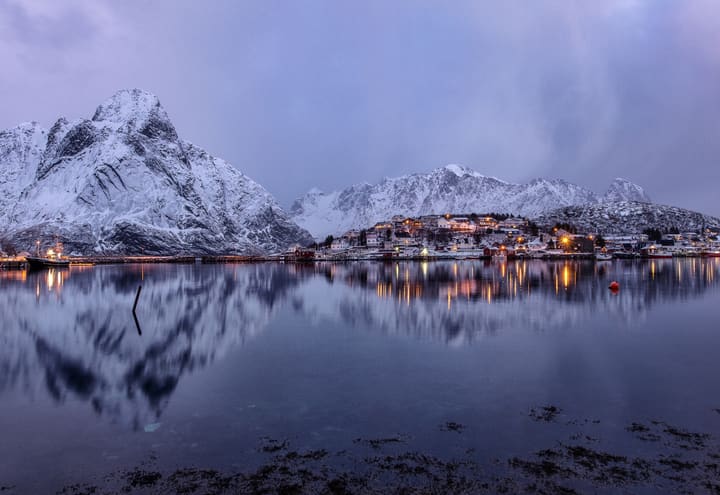
Reine in Lofoten in winter with snow-covered peaks reflected in the still fjord
Key numbers

The facts that decide a Lofoten trip

Latitude
68° N, about 180 km north of the Arctic Circle; the E10 runs the length of the islands from the Lofast mainland link to Å
Polar night
Svolvær: sun below the horizon from about 8 December to 5 January; the mountains hide it for longer in the villages
Midnight sun
Svolvær about 26 May to 18 July; Reine about 28 May to 17 July
Winter temperatures
Monthly means of 1.5 °C in December, 0.3 °C in January and −0.4 °C in February at Svolvær (1991–2020); the record low is only −12.3 °C
Precipitation
About 1,500 mm a year at Svolvær, with December (180 mm) and January (159 mm) the wettest months; June and July are much drier
Airports
Leknes and Svolvær (Widerøe turboprops via Bodø); Harstad/Narvik Evenes for jets from Oslo, about 160 to 170 km from Svolvær
Distances
Svolvær to Leknes about 68 km, Leknes to Å about 65 km; Svolvær to Reine about 130 km on the E10
Does Lofoten fit the trip?

Lofoten works when the season and the base match what you are buying.

Start with what the trip is really for, then check whether the month and the logistics support it.

Weather tolerance

Good fit

Travelers who accept that a winter day can be planned only the evening before, and who enjoy a storm from a warm cabin as much as a clear morning.

Weak fit

Anyone with a fixed shot list or a single free evening for aurora; the coast can stay under cloud for most of a week.
Transport

Good fit

Self-drivers with winter-road experience, or summer visitors happy to drive the E10 at a slow pace between villages and trailheads.

Weak fit

Travelers who expect city buses and hotel pickups; local buses run a few times a day and most tours leave from Svolvær.

Accommodation

Good fit

Couples, families and photo groups who want a cabin by the water with a kitchen and are willing to cook or drive to dinner.

Weak fit

Travelers who want a large hotel with a restaurant, a spa and late check-in on every night of the trip.

Season choice

Good fit

Winter (December to March) for aurora, snow and the cod season; late May to mid-July for hiking under the midnight sun.

Weak fit

October and November bring the darkest, wettest weeks with few tours; April and early May are quiet with snow still on the trails.

Season fit

The same Lofoten trip changes by month.

Daylight, weather, tour seasons and prices move together; pick the month before the hotel.

December to early January

December to early January

Polar night with about five hours of civil twilight, the darkest aurora weeks and the quietest villages outside Christmas week.

Check: Storms close the E10 and cancel ferries; some rorbuer and restaurants close or run reduced hours, so confirm opening before booking.

Late January to February

Late January to February

The sun returns, the cod fishery fills the harbours, snow settles on the peaks and aurora evenings stay long.

Check: Some of the wettest weather of the year; count on one lost day in three and keep the plan flexible.

March

March

The best winter balance: about 11 to 13 hours of daylight, snow on the mountains, the stockfish racks full and the aurora season still open.

Check: Photo tours and the better rorbuer book out for March; secure the cabin before the flights.

Late May to mid-July

Late May to mid-July

Midnight sun, the driest weeks of the year, hikes to Reinebringen and Ryten, kayaking and fishing trips; also the busiest and most expensive weeks.

Check: Cabins, campsites and the Moskenes ferry fill; Reinebringen and the E10 parking areas are crowded in the middle of the day.

August to September

August to September

Long days without the midnight-sun crowds, the warmest sea of the year and the first aurora from late August.

Check: Rain returns in September; hiking is still good but the evenings shorten and some summer boat tours end.

Where to stay

Split the stay if you have five nights; otherwise pick the end that matches the arrival.

Arrive from Evenes or by coastal ship and stay at the Svolvær end; arrive on the Bodø ferry and stay at the Reine end. With five nights or more, book two or three nights at each end so the E10 is driven once, not daily. Use Leknes and Ballstad when the west-coast beaches, a golf or surf plan, or the Leknes airport matter more than the classic harbour views. In winter, favour a base with a restaurant or a kitchen, because the villages close early and the road can close altogether.

Svolvær end

Thon Hotel Lofoten

Large harbour hotel in the centre of Svolvær. On the harbour beside the tour departures and the coastal-ship quay; big breakfast, late check-in and a restaurant for winter nights when the villages close.

Compare this base with live prices
Reine end

Eliassen Rorbuer

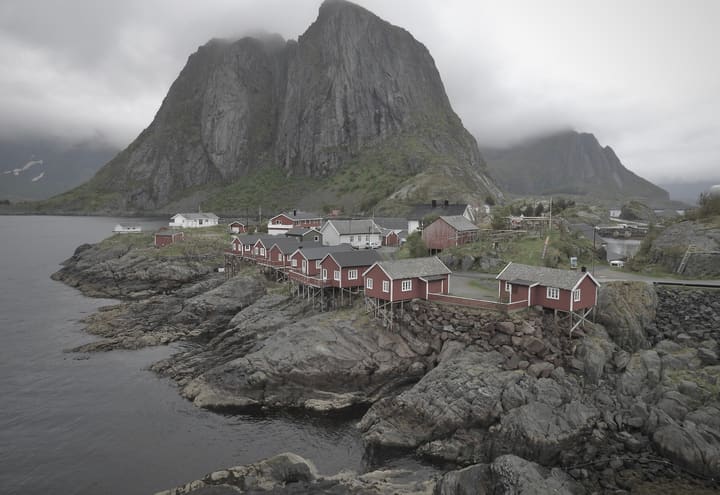
Red rorbuer on the rocks at Hamnøy. The cabins in the classic Hamnøy bridge photograph, with sea and mountain views from the deck; a restaurant on site helps in winter when little else is open.

Compare this base with live prices
Leknes middle

Hattvika Lodge

Modern lodge and cabins in Ballstad harbour. Design cabins on the Ballstad waterfront with guided hikes, kayaks and a sauna arranged on site; a strong winter and shoulder-season base 20 minutes from the beaches.

Compare this base with live prices
Lofoten booking guides

Month, tour and trip-length questions answered with checked numbers.

Each guide ends with the reviewed stay and experience links for that trip.

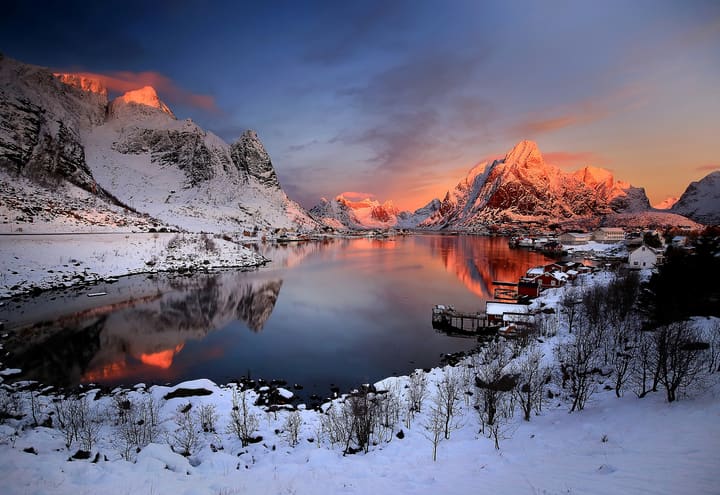
Winter sunrise lighting the mountain tops above Reine and its snow-covered shore
Winter

Lofoten in winter: mild numbers, hard weather, dark in December and bright by March.

Lofoten from December to March: daylight by month, means near freezing, storms that close the E10, the cod season, which villages stay open and what to book first.

Read the guide
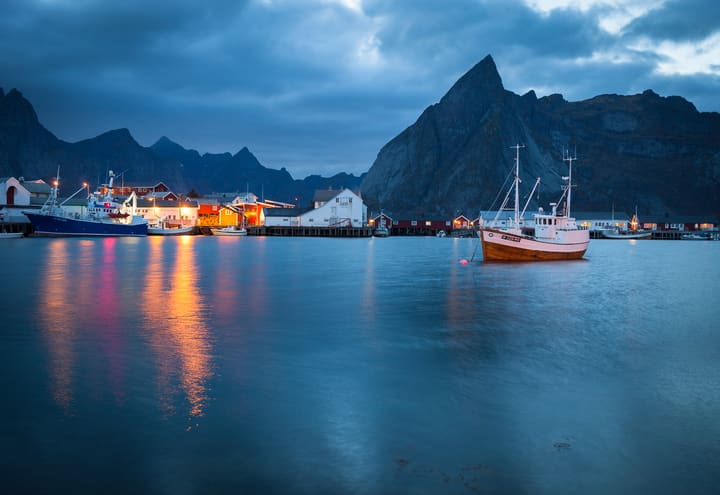
Fishing boats and lit cabins in Hamnøy harbour at dusk under dark Lofoten peaks
Aurora

Northern lights in Lofoten: where to stand, when to go and when a guide earns the fare.

Northern lights in Lofoten: the September to early April season, why the coast is darker but cloudier than Tromsø, which beaches to stand on and when a tour is worth it.

Read the guide
Red rorbuer fishing cabins on Hamnøy below the steep Lofoten mountains
Getting there

How to get to Lofoten: Bodø turboprops, the Evenes drive, the Moskenes ferry or the coastal ship.

How to get to Lofoten: Widerøe turboprops via Bodø to Leknes or Svolvær, jets to Evenes and the Lofast road, the Bodø to Moskenes car ferry and the coastal ships.

Read the guide
Red rorbuer fishing cabins on Hamnøy below the steep Lofoten mountains
Summer

Lofoten in summer: midnight sun from late May to mid-July, hikes, and a road that fills up.

Lofoten in summer: midnight sun from about 26 May to 18 July, 10 to 13 °C means, Reinebringen and Ryten, the E10 road trip, and the pressure on cabins and the ferry.

Read the guide
Reine in Lofoten in winter with snow-covered peaks reflected in the still fjord
Trip length

How many days in Lofoten? Three nights at one end, five to split, seven for the weather.

How many days you need in Lofoten: three nights at one end, five split between Svolvær and Reine, seven for weather insurance and the far corners, plus the driving.

Read the guide
Getting there

Arrival and the first day decide the rest.

Winter delays are normal; the first evening belongs to arrival, not to a tour.

Leknes and Svolvær airports (Widerøe via Bodø)

Leknes and Svolvær airports (Widerøe via Bodø)

Best for
Short transfers: Leknes airport is about 1 km from town and Svolvær's is about 6 km east of it; both connect through Bodø on small turboprops, with a seasonal Oslo link from Svolvær.
Caution
Turboprop seats are few and fares are high; weather diversions are common in winter, and Svolvær airport has taxis only, no bus.
Harstad/Narvik Airport Evenes

Harstad/Narvik Airport Evenes

Best for
Jet flights from Oslo on SAS and Norwegian plus seasonal European routes, rental cars at the terminal and the Lofast road to Svolvær in about 2.5 to 3 hours.
Caution
The drive continues past Svolvær: Reine is another two hours or more, so land early or sleep the first night at the Svolvær end.
Bodø ferry and the coastal ships

Bodø ferry and the coastal ships

Best for
Arriving with a car from the south on the Bodø to Moskenes ferry (about 3 to 3.5 hours), or by Hurtigruten and Havila, which call at Stamsund and Svolvær.
Caution
Summer ferry departures fill; reserve the car in advance. Winter crossings can be rough or cancelled, so keep a spare night in Bodø or near Moskenes.
Booking order

Book in this order and the plan survives a cloudy night.

  1. Fix the season against daylight and weather

    Decide whether you want polar-night aurora, the March balance or midnight-sun hiking; each carries a different weather risk and a different booking lead time.

  2. Book the rorbu before the flights

    Named cabins in Reine, Hamnøy, Sakrisøy and Henningsvær sell out for summer and March months ahead; flights and the ferry can be arranged around a confirmed cabin.

  3. Choose the arrival by how far you must drive

    Evenes plus the Lofast road suits a Svolvær start; the Bodø ferry lands at Moskenes a few kilometres from Reine; Leknes airport sits between the two.

  4. Rent the car with the flights

    Rental cars at Evenes, Leknes, Svolvær and Bodø sell out in summer and at Easter; without a car the trip depends on a few daily buses and Svolvær-based tours.

  5. Book the boat and day tours last

    Trollfjord cruises, sea-eagle RIBs and day tours to Reine run daily in season and rarely sell out weeks ahead; aurora tours are best booked a day or two out once the forecast is known.

Practical questions

Common Lofoten planning questions

Is Lofoten or Tromsø better for the northern lights?

Tromsø has more tour operators and a city base; Lofoten has darker villages and the aurora over the sea, but a wetter, cloudier coast. If aurora is the only goal, Tromsø is the safer bet. If you want aurora as part of a landscape trip with rorbuer and mountains, Lofoten is the better choice, with a longer stay to ride out the weather.

Do I need a car in Lofoten?

For most trips, yes. The villages are spread along about 130 km of the E10 between Svolvær and Å, local buses run a few times a day and most tours leave from Svolvær. Without a car, base in Svolvær, take the bus or a guided day trip to Reine, and book boat tours from the harbour.

How cold is Lofoten in winter?

Mild for the latitude: Svolvær's monthly means stay around freezing from December to March, and the record low is only −12.3 °C. The cold comes from wind and wet snow rather than deep frost, so pack a waterproof shell and grip soles rather than an expedition parka.

When is the midnight sun in Lofoten?

From about 26 May to 18 July at Svolvær and about 28 May to 17 July at Reine. The sun stays above the horizon around the clock, though mountains hide it from some villages at midnight; north-facing shores such as Gimsøya and the beaches near Leknes see it best.

Can I visit Lofoten on a day trip?

Only as a coastal-ship port call at Svolvær or Stamsund, or as a very long day from Evenes. The islands need three nights at the least; a single day sees one harbour and a lot of road.

Which end of Lofoten should I stay at?

Svolvær and Henningsvær for the tours, restaurants and airport; Reine, Hamnøy and Sakrisøy for the classic cabins, Reinebringen and the Bodø ferry. With five nights or more, split the stay so that no day includes the full 130 km drive in both directions.

Photography

Photo credits for the Lofoten pages

Photographs are used under the licence stated for each file; follow the link for the original.